17 September 2025

Naming Places In My World & Why It Takes Me Forever

Sometimes, I spend hours trying to pick a good name for a place in my stories. This sounds silly, but the names we choose for our fiction matter because they matter in real life.

Location-Naming Practices

In the real world, the name of a place can tell you a little bit about what that place is like, what kinds of people the owners of that place respect or honor, or concepts and ideals that are valued there. We can confidently say that the most common place-naming practices of humans center around qualities, people, or concepts.

Qualities

Naming a place after a quality is useful because it makes identifying the right place easy. If you're trying to get to a place called Huge Purple Desert, you'll probably figure out you're there when you see a huge purple desert.

Places named after their qualities:

  • The Yellowstone River
    • Named after the yellow sandstone bluffs that line the riverbanks
  • The Great Plains
    • This should be pretty obvious how it got its name …
  • The Rocky Mountains
    • This one should also be easy
  • The Himalayas
    • The word "Himalaya" comes from Sanskrit, meaning "abode of snow"
  • The Sahara
    • The word "Sahara" comes from the Arabic word "çahra," which means "desert"
  • The Cuyahoga River
    • The word "Cuyahoga" is an Anglicized spelling of the word "cayagaga," a Mohawk or Iroquois word that means "crooked river"

    People

    Consider all the places in the United States named after Martin Luther King Jr., Robert E. Lee, or previous presidents. When we name places after people, it shows what we value, it shows who our heroes are, who we deem worthy of honor.

    Places named after people:

    • The city of Alexandria in Egypt
      • Named after Alexander the Great
    • Washington State in the United States
      • Named after George Washington
    • The city of Rome in Italy
      • Named after the mythical founder of Rome, Romulus
    • The nation of Israel
      • Named after the biblical Israel (also known as Jacob)

    Concepts

    When we name places after concepts, it can tell people about the intangible things we value.

    Places named after concepts:

    • The city of Memphis in Tennessee
      • Named after the Egyptian city of Memphis, which comes from the ancient Egyptian word "men-nefer," meaning "enduring beauty"
    • Nihon – the nation of Japan
      • Nihon is the Japanese word for Japan, and it means "where the sun originates." It is often translated to "Land of the Rising Sun" in English
    • Zhōngguó – the nation of China
      • Zhōngguó is the Chinese word for China, which literally means "middle kingdom" or "middle state," which refers to the ancient Chinese worldview that China was the center of the world
    • The city of Philadelphia
      • The founder of the city, William Penn, combined two ancient Greek words, "philos" and "adelphos" to mean "brotherly love"

    Naming Places in Stories

    The world I’m building is very different from ours. It’s an alien planet called Jakad, and everything about it is alien. The trees are not trees, only tree-like. The animals are not animals, just animal-like. There are humans on this planet, humans from fifty thousand years ago, taken from Earth to become slaves, then lost and forgotten on Jakad.

    Humanity spreads across the land, and even though the world is completely alien, they manage to make it feel somewhat human. And part of that human-ness comes from the way they name things in the world around them.

    So.

    Here’s how I’ve gone about it, and here’s why it often takes me hours to settle on the right name for a place.

    I have my map that I drew.

    © Jessica McKendry

    I started naming the most obvious places. The subcontinents, the rivers, the lakes, the mountains. Since I have created a unique language for each region of this continent, I named everything in the language tied to that location.

    Take the mountain range near the bottom of the map, just beneath the big lake. The people who live in the mountains believe that these mountains are holy and that they are at the very top of the world. I wanted the name of this mountain range to meet three requirements:

    1. The name should reflect the beliefs of the people living there
    2. The name should sound like it belongs to the language of the people living there
    3. The name should sound good to me

    I'm very picky about words. There are some words I absolutely hate just because of how they sound, like moist or honkytonk.

    Those words give me the ick.

    I ended up choosing the name Phoraïth, which, in my made-up language, Pharais, comes from the roots pho- (meaning high, elevated, or supreme) and -raïth (meaning crown, crest, or pinnacle). Together, the words mean The High Crown, which perfectly fits the beliefs of the people living there. I also like the sound of the name, and it fits the language.

    Near the top right of the continent, there is a large, rounded peninsula. This is a wetland, and the people who live there call it Molakai, which means Land of Reeds in the language of that region.

    Sometimes, I’m not quite sure what I want a place to be like, so I need to spend some time thinking about the environment and what makes a certain place special. I have developed some of the world's history, so there will definitely be places named after historical figures important to each region, but I haven’t gotten that far yet.

    That’s next week’s problem!

    Writers, how do you pick names for places in your stories? Readers, do you like it when the names of places in the books you read are well thought out? Or does it not matter?

    12 September 2025

    Tough Choices

    An Autofiction

    It took a bit of courage to ask the difficult question, but it needed to be asked. I needed to know.

    "How long do you think he has?"

    I couldn't look at the vet, so I watched as Jasper happily sniffed his way around the examination room. When he got to me, he licked my shoe, then looked up at me, his tongue hanging joyfully out of the side of his mouth.

    "Well, it's hard to say," the vet responded. Her voice was kind, though there was a note of sadness in it. "Some dogs in his condition really pull through. But ... I wouldn't expect years, at this point."

    Over the summer, I had come to this conclusion on my own. Jasper kept losing weight, despite the countless treats and heaping meals we gave him. The muscles all along his spine and hips had atrophied, until he started to look like a walking skeleton. He looked like those dogs on TV, the ones you'd see on some Animal Planet rescue show, where they go in and save starving dogs from neglectful or abusive parents.

    "Is he eating?" The vet asked.

    I nodded. "Like a vacuum. We give him two cups of food a day, plus a lot of treats. He was overweight a few years ago, and you guys told us to cut back on his food."

    She hummed softly, then wrote something down on her clipboard. "Alright, let's give him as much food as he wants now."

    "Well ... he would eat until he explodes," I told her.

    "Ah," she said with a soft laugh. "We don't want that, do we, Jasper? Two heaping cups of food in the morning, and two in the evening, then."

    Jasper looked over at her when she said his name, then wagged his tail and waddled toward her. She took out a bag of treats, and his tail became wild, wiggling fast as he opened his mouth to pant, excitedly. For the next few minutes, she would be his best friend in the whole wide world.

    The vet tossed him a treat, and he snatched it right out of the air. "He's got good reflexes," she said. "And he's such a happy boy."

    Jasper just stared at her, tongue hanging out, his dark eyes wide and adoring.

    “What should we do?” I asked the vet.

    She looked at me with a gentle, solemn expression. “It’s up to you. We can run panels of bloodwork and take X-rays until we figure out what else is going on with him … or we can make sure he’s comfortable.

    My eyes began to burn. I knew this conversation would come eventually, and as Jasper’s condition has worsened over the months, I’ve felt it creeping closer and closer.

    Yet, now that it had actually come, it felt like being hit by a truck.

    Jasper is one of my best friends. He’s my buddy. To imagine that we were at a point where it wouldn’t make sense to keep looking for what was wrong with him … it was heartbreaking. I wanted to tell her to do the bloodwork, the X-rays. I would have, if I were making more money.

    The vet must have seen the pain on my face. “You guys have already gone above and beyond for him.”

    I nodded and looked at him, whose tail was tapping quickly against the floor as he stared up at the vet, waiting for another treat. She handed him one, and he joyfully gobbled it up before resuming the exact same position, begging for yet another.

    “Okay,” I said softly. “What can we do to make him more comfortable?”

    She prescribed more carprofen, a drug that would help reduce the pain from his arthritis. It is also a drug that can cause liver and kidney damage with prolonged use, but at this point, we aren’t sure what the long-term looks like for him. If he even has a long-term.

    We went home, and he was very happy to get a surprise second bowl of food for dinner. I sat next to him as he ate. He didn’t even notice me until he was finished eating, and then he came to sit in my lap. I pet his fluffy ears, and his tongue started hanging out the side of his mouth again.

    “You are the worst dog,” I told him lovingly, then kissed him on his head and hugged him. He leaned backward into me, leaning his upside-down face against my shoulder.

    I wondered what he knew. He must have known I felt sad. He must realize he doesn’t quite move like he used to. Does he wonder why things hurt, or does he simply accept them? Does he know his body is starting to fail him? Would he hate me if he could understand that we aren’t trying to fix him anymore?

    He sniffed my chin and gave me a stinky lick. His breath smelled terrible but I couldn’t even manage to be disgusted at the moment. I laughed and squeezed him tighter. It seemed like answer enough.

    “Love you too, buddy.”

    Jasper at the Vet
    © Jessica McKendry


    10 September 2025

    My Whole World Just Shifted – Adventures in Cartography

    Last week, I was at my parents' house, sitting at their kitchen island and drawing a map for Convergence. So far, this is my hand-drawn world map, created on my iPad using Procreate.

    As a science-fiction writer and someone who loves science in general, I appreciate it when stories take real science into consideration. No, it isn't necessary, I just like it.

    However, I sometimes take it a little too far. For example, here's a little bit of my thought process moving forward with this map.

    ME: Time to draw the equator. *starts drawing a red line through the middle*

    BRAIN: Wait! If you draw the equator there, then the continent where your story is taking place is going to be really hot. You wanted more temperate climates for your main continent?

    ME: Yeah … I did … hmm … *looks at a map of Earth* wow. There really isn't much land below the equator. Okay, well, I think it would be cool to have more landmass on this planet below the equator.

    BRAIN: Above or below doesn't really matter. There's no "right side up" in space, so all that matters is which areas you want to be colder and which areas you want to be warmer.

    ME: Wait … it doesn't matter? Hold on. *looks at a map of Earth again*

    BRAIN: See? The direction North or South doesn't actually matter. You can flip them, and it doesn't change anything. The magnetic poles change every few hundred thousand years, too.


    ME: Hold on. So who decided to draw the Earth like that? Who decided to draw the Earth "right side up" if it doesn't matter? Has anyone ever drawn the Earth the other way?

    BRAIN: *tries to shrug, but it has no shoulders*

    So I spent the next thirty minutes looking at maps of the Earth, and realizing that "North" being at the "top" of the world is an entirely arbitrary decision. We could have just as easily called it "South," and drawn all our maps with Greenland and Russia at the bottom, and Antarctica at the very top.

    Which makes a lot of sense, because in space, there's no up or down, we just don't often have to think about it unless you spend hours and hours drawing maps. Modern maps could easily look like this:

    Apparently, there were many cultures in the past that placed East at the top of the map instead of North for various reasons. Essentially, the use of the North Star for navigation and Eurocentric perspectives contributed to the development of modern maps, with Europe at the top center of it all.

    I voiced this revelation out loud to my mom, and her brain just about exploded.

    05 September 2025

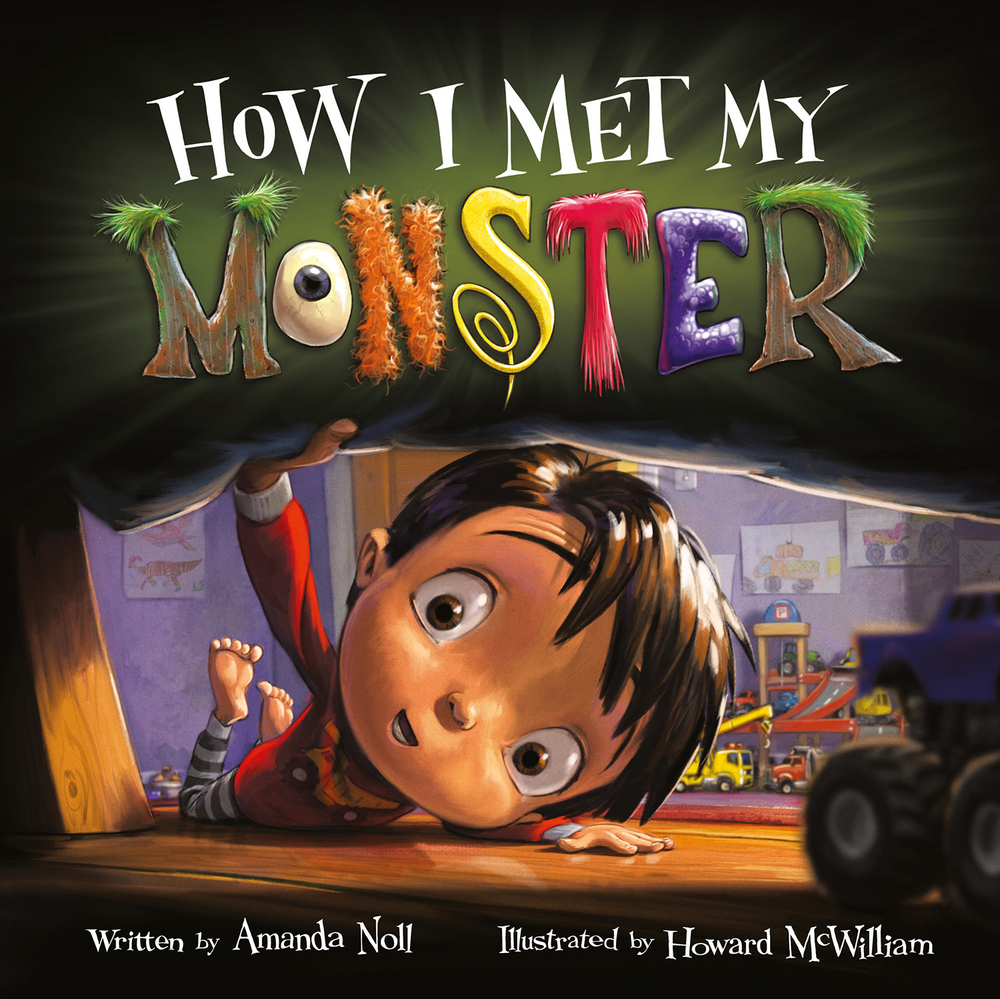
    BOOK REVIEW: How I Met My Monster - Written by Amanda Noll & Illustrated by Howard McWilliam

    Review: ★★★★☆

    Summary

    One night, when Ethan reaches under his bed for a toy truck, he finds this note instead:

    "Monsters! Meet here for final test!"

    Ethan is sure his parents are trying to trick him into staying in bed ... until he sees a bunch of colorful eyes blinking back at him.

    How does stomach rumbling and snorting help one monster become Ethan's best bedtime friend? Find out in this silly-spooky prequel to the award-winning I Need My Monster.

    How I Met My Monster is an irresistible monster-under-the-bed story for monster-loving kids. The perfect balance of shivers and giggles will keep you under your covers, and you'll soon be sleeping soundly.

    My Review

    I was checking in books people had returned to the library when I came across this book. The cover art had caught my eye. I absolutely loved the illustration style, and the colorful way "monster" is written made it impossible not to open the book and see what it was about.

    Ethan is a little boy who can't fall asleep after his parents tuck him into bed. He gets up and begins to secretly play with his toys when he finds a strange note under his bed. It turns out that monsters are real, and their sole purpose is to live under children's beds and ensure a child stays in bed until they fall asleep. They're actually quite nice.

    Ethan meets several monsters who are all in training to become his monster, but he isn't scared of any of them. A whole range of silly things happen as they try to find the best monster for Ethan, and finally, they settle on a monster who is friendly and just scary enough to keep Ethan in bed at night.

    Art: ★★★★★

    Honestly, it was the cover art that made me open this book. I know we shouldn't judge a book by its cover, but I absolutely did, and this time it was worth it. The illustrations are vibrant and fun, Ethan is an adorable little boy, and the monsters are also pretty cute. I loved how colorful it was for a story set at night.

    Plot: ★★★★☆

    The plot was just way too cute. Nice monsters under the bed who actually help children by scaring them? Yes. Absolutely, yes.

    Characters: ★★★★☆

    Ethan is a brave little boy! If I found out monsters were living under my bed, even super cute ones, I don't think I'd be as fearless as he is in this book! I think his reaction to the monsters would help any little kids reading the book or listening to their parents read this book know that the monsters aren't really there to be feared, they're there to help!

    Setting: ★★★★☆

    The story is set in Ethan's bedroom and his house, which could have been pretty boring, but the art style made it colorful and exciting.

    Recommended For

    Anyone! I'm 28, and even I enjoyed reading this cute story. However, I would mainly recommend it for ages 5+.

    Triggers

    If you have children who would be scared of the thought of cute, helpful monsters under their bed, this probably isn't for them.

    03 September 2025

    IWSG Day – Using AI In The Creative Process

    Once again, it's IWSG day!

    Purpose: To share and encourage. Writers can express doubts and concerns without fear of appearing foolish or weak. Those who have been through the fire can offer assistance and guidance. It’s a safe haven for insecure writers of all kinds!


    Let's jump into this month's question:

    What are your thoughts on using AI, such as GPChat, Raptor, and others with your writing? Would you use it for research, storybible, or creating outlines/beats?

    Honestly, I have very complicated feelings about AI. Yes, I have used it, and I think most of us have at least tried it out to some degree at this point. However, I try to use it very sparingly and only in tasks that are too big to manage on my own.

    What I Use It For

    Cartography

    I drew a map on my iPad using Procreate to get an idea of what I want my science-fantasy world to look like. I've shared it on my blog before, but I'll share it again now.


    I'm not sure if you can tell from this low-resolution picture, but on the map, I've marked areas for forests, rivers, and mountains. I hand-drew this map, and I'm pretty proud of it. However, it just didn't feel like my map was coming to life like this. So … I plugged it into ChatGPT and asked it to make a realistic version of the map, as if it were a satellite image.

    And this is what it gave me.


    At first, I was extremely impressed.

    However, as an artist, I have quite an eye for detail, and the longer I looked at the map it spit out for me, the more I was annoyed that it hadn't followed the exact coastlines, and it had changed some of the river systems. It had destroyed one of my peninsulas and made some of the lakes far bigger than they had been in my original drawing, or erased them completely.

    Every time I asked ChatGPT to fix it, it would partially correct the issue, but then it would generate increasingly more distorted images, which ultimately proved disappointing and exhausting. Don't get me wrong, this is pretty cool for some concept art, but if I’m going to include a map in my novel, it’s going to be done by a professional artist, not an AI. What can I say, artists really do it better and have an eye for detail, too.

    Languages

    Because I let my world-building get out of control at times, I love developing languages. But I develop so many that it can get confusing, and sometimes it's difficult to remember everything I come up with. Recently, I've been creating language rules and words, and inputting them into ChatGPT, then later using ChatGPT as a dictionary and a translator for my own languages.

    When I am drafting and need to write a prayer or hymn in one of the languages I've created, I don't have to individually look up each word and manually put them in the correct syntax. As cool as that would be, I honestly don't have the brain power for it.

    So, I go to the chat where I was developing a language, and ask it how I would say this or that in the language I made, and it'll spit it back out to me using the grammar rules and syntax I designed. If I haven’t made up a word for something yet, ChatGPT will tell me, “You don’t have a word for this.” And at that point, I’ll make up a new word.

    I do double-check ChatGPT’s translation ability, because off and on, it will mess up. But it’s a nice guideline for me.

    Math

    The world I'm building often feels like a fantasy world, until I zoom out to the bigger picture and remember that this is a fantasy-like story set in a science fiction universe. At the end of the day, I'm more of a science fiction writer than a fantasy writer, because science is just so fucking cool.

    As a science fiction writer, I like to try to be as scientifically accurate as possible when creating my stories, and even when I bend the laws of nature to create magic systems and societies on other planets, I still try to keep those laws in mind. Of course, there is a degree of accuracy that's simply impossible due to how I want the narrative to play out. Still, I try my best.

    I often use ChatGPT to help me with math that's just too convoluted for my simple brain.

    Example: 

    The world I'm building is called Jakaad, and yes, it is a whole world. Jakaad is a planet that orbits a K-type main-sequence star (orange, instead of a G-type main-sequence star, which is yellow, like our sun). This means the star has a longer lifespan than our sun. Jakaad is a rocky planet with a liquid iron core, similar to Earth's, but it is slightly larger than Earth (1.37 times Earth's mass and 1.6 times Earth's circumference). One day on Jakaad is 0.95 Earth days, and one year on Jakaad is 1.17 Earth years. 

    So.

    If humans are living on Jakaad who age at the same speed as humans on Earth, how old would a human have to be on Jakaad to be about 12 years old/starting puberty on Earth?

    I've done this math on my own, but I have absolutely used ChatGPT to check my math. And sometimes I’m wrong.

    Again, ChatGPT is also wrong sometimes, so I always double-check its answers and make sure the math makes sense.

    Cute Blog Pics

    Open source images often don't make the cut when it comes to pictures decorating my blog posts. I don't have the time to draw relevant images, and I also don't have the money to pay an artist to do them. I definitely see this more as decoration than art, and for this, I use the Image Playground app on my Mac.

    Using AI In Moderation

    I will never use AI to come near my actual writing. I don't want it to help me plot my stories, and I don't want it to modify my writing. I have a few personal reasons for this. 

    First, I genuinely enjoy writing. It is a pure act of creation; it is pouring my soul into my fingertips and transforming it into a format that could outlive me. If AI is doing it for me, it not only defeats the purpose, but I cannot claim that my soul is in it. Either there is no "soul" behind AI writing, or if there is, it isn't a human one. 

    Second, AI isn't actually that good at being creative. It can only spit out what you put into it and what it knows from the internet. And if you've ever spent an hour on the internet, it's easy to see that it's filled with misinformation and disinformation. So … be cautious. 

    Third, I'm already so reliant on technology. I don't want my brain to be reliant on AI. I don't want AI doing my thinking and creating for me. 

    Fourth, and most importantly, even though I'm a hypocrite about this, we should not be using AI for art. We should be using AI to perform repetitive tasks that drain our creativity, and reserve the creative tasks for humans. I want AI to be integrated into robots so that they can do my dishes, cook, and clean for me, allowing me to spend my time being creative. 

    However, AI won't be developed to do the things we want it to do; it will be further developed to do the things we are already using it for. And if we continue to use AI to do our creative work for us, that's what it will continue to be trained to do. 

    AI is a valuable tool, but I believe it is one we must use wisely. 

    Do you guys use AI for anything? Do you use it in your creative process? 

    Don't forget to visit all the other amazing bloggers posting for the IWSG today!